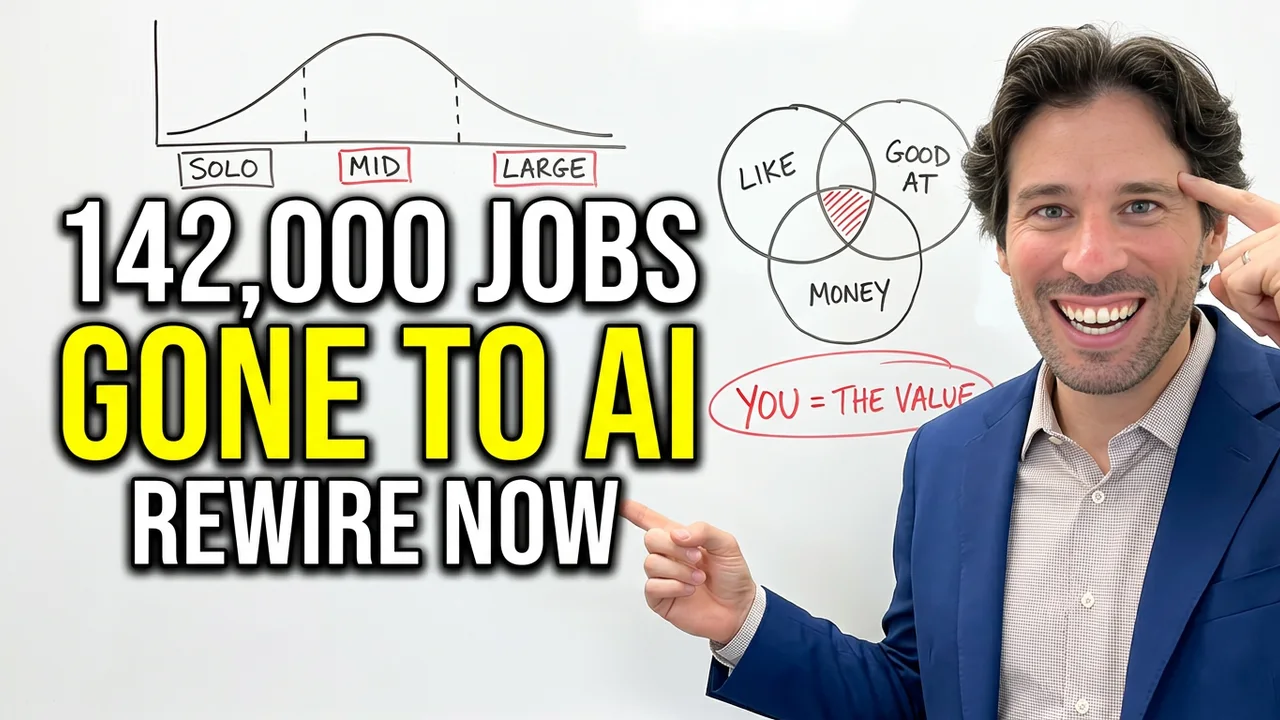
What does "wiring for AI" actually mean for someone just laid off?
Solopreneurs survive AI layoffs by using first-principles problem hunting, the like/good-at/money filter, and building systems instead of selling time. That framework is what I mapped out on Day 308 of vibe coding, when the pieces finally locked together. Meta cut 10% of its workforce, and by one rough count I've pieced together from public reporting, something like 142,000 people in the US have already been displaced by AI this year — Charles's own estimate, not a verified government figure, but the direction is hard to argue with. Wiring for AI is the practical skill of restructuring how you work, earn, and think so that artificial intelligence amplifies your output rather than replacing it entirely. The skill of adjusting to that reality is what I wanted to map out.
At [2:15] I said: "I thought there should be a video on wiring for AI, wiring for entrepreneurship, because it is definitely a skill that we are gonna have to learn" — and that framing stuck with me for the rest of the session.
How is the workforce actually splitting under AI pressure?
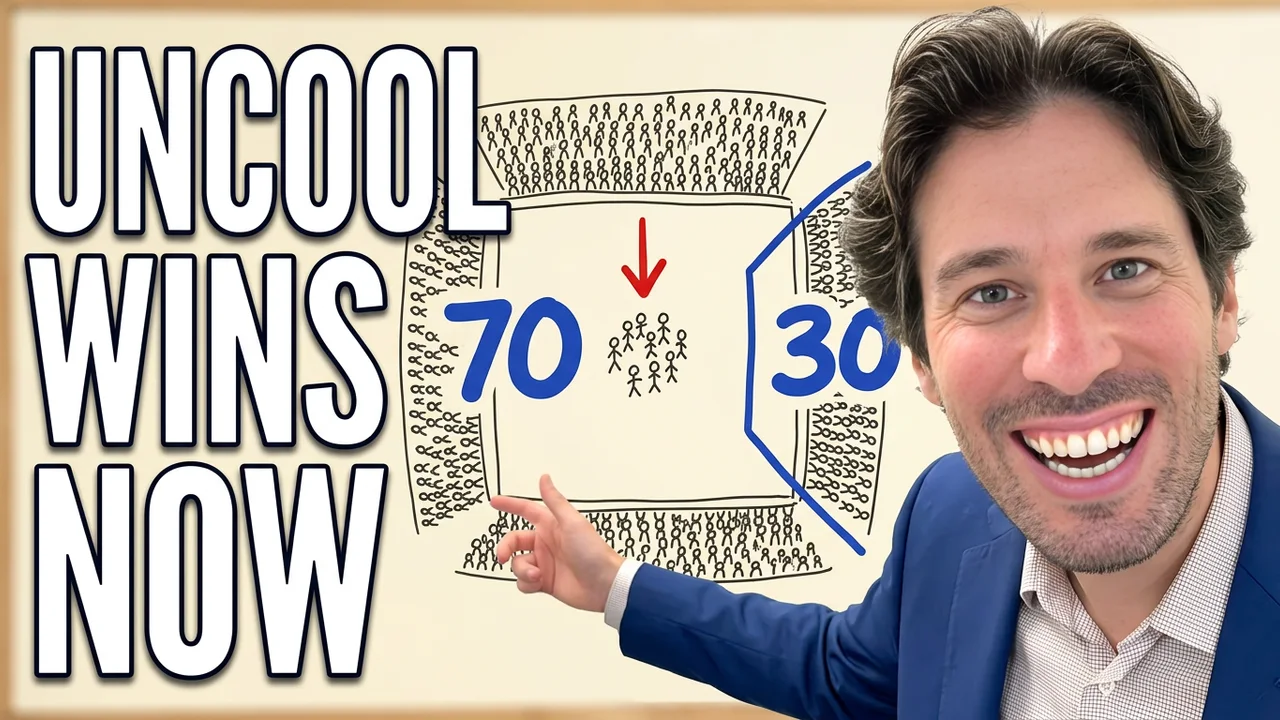
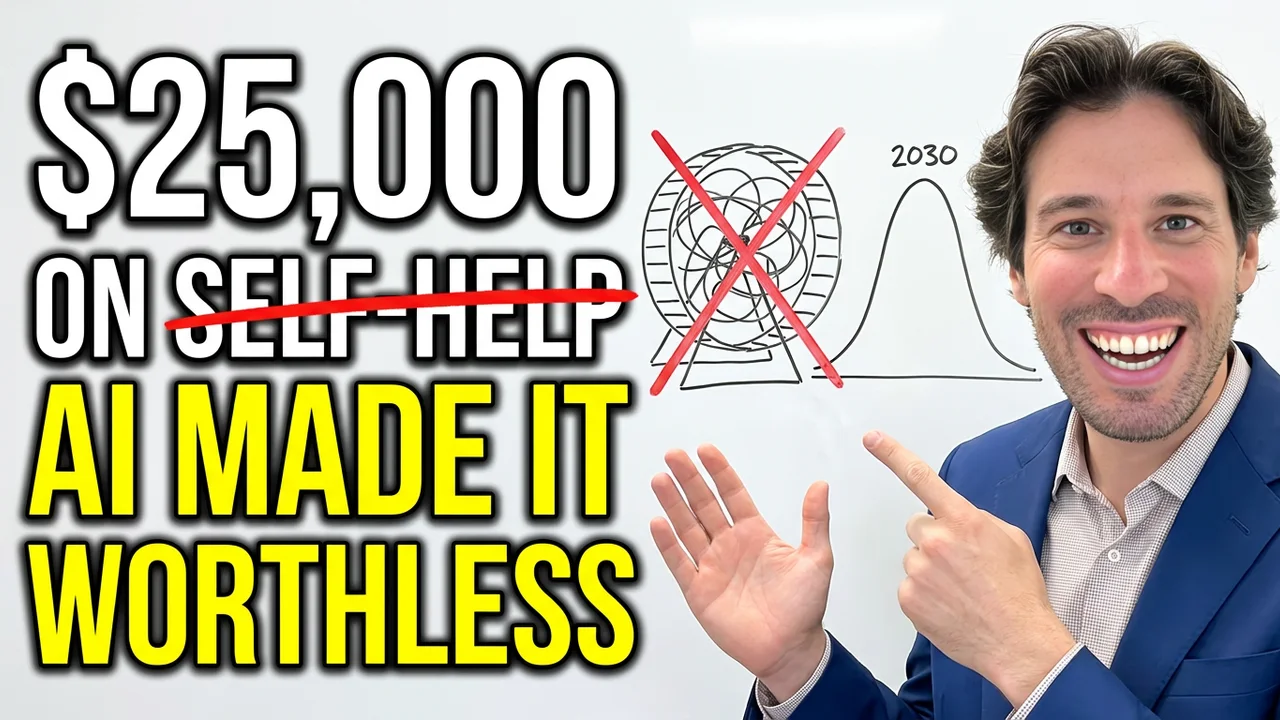
I've been thinking about this in thirds. Large companies — your Alphabets, your Nvidias, your Metas — will always exist. The Pareto principle — the 80/20 rule has already shifted, in my view, closer to a 90/10 split as wealth concentrates further — a direction the Federal Reserve's Distributional Financial Accounts bear out, with the top 10% of US households holding roughly two-thirds of total wealth, a share that has grown over the past two decades. But the coming decade pushes back against that concentration in a specific way: micro-businesses and solo operators become viable at a scale they never were before.
My rough model looks like this:
| Segment | Size | Share of future workforce (Charles's estimate) |
|---|---|---|
| Solo / micro (10 or fewer) | 1–10 people | ~30% |
| Mid-tier | 11–100 people | ~30% |
| Large enterprise | Fortune 1000+ | ~30% |
The remaining slice — and this is the part that keeps me up — is people who won't bridge the gap. When robotics and robotaxis and fully automated services arrive at scale, there will be a contingency that can't participate fully. I don't have a clean answer for that. I left it to the thought leaders.
You might also like

Why does objectivity matter more than passion when building a solopreneur business?
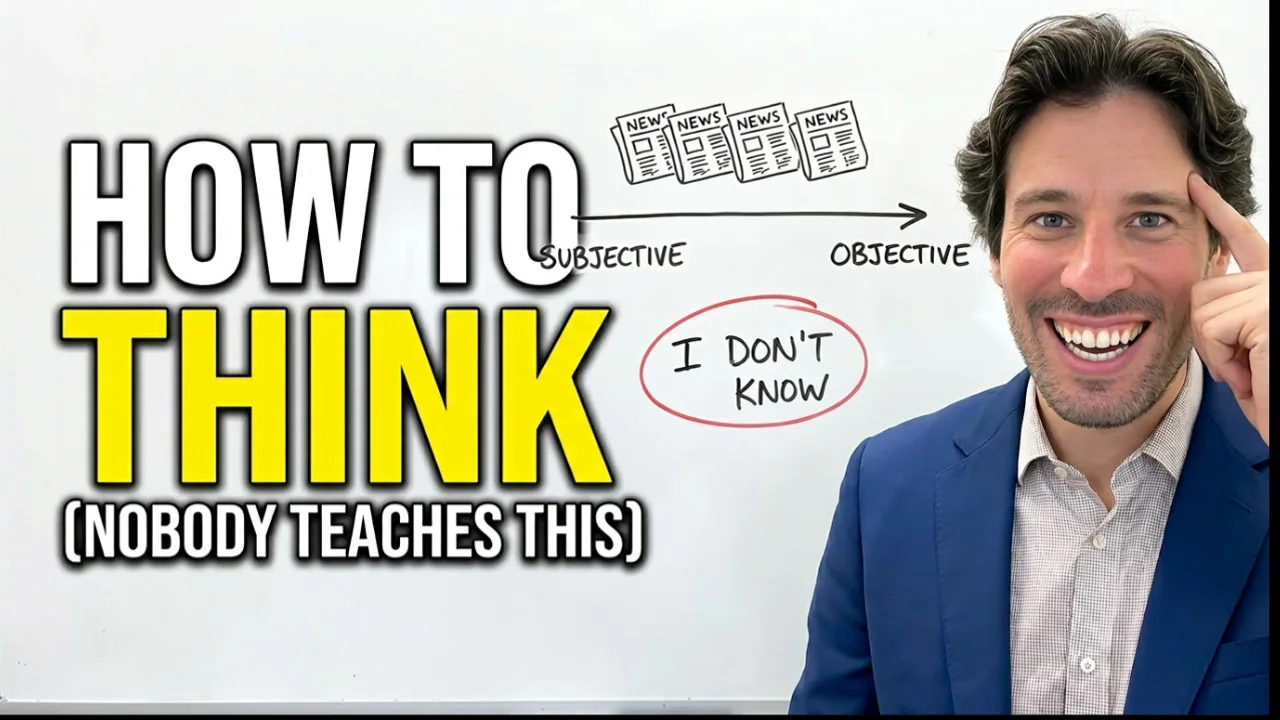
I keep coming back to Jensen Huang at Nvidia as the clearest example I can name. He looks at where things actually are, not where he wishes they were. Elon Musk calls it first principles. I call it the hardest thing most people refuse to do.
The trap is subjectivity. If you look at the world through your own emotional lens — through what you wish were true about money, or talent, or the market — you end up building for a problem that doesn't exist, or ignoring a problem that does. Health is my go-to analogy: I wish I could skip movement and eat whatever I want. Objectively, that doesn't work. Entrepreneurship is identical.
What is the like-good-money triangle, and how do I weight it?
This is a framework I've used for years, and I think it's more useful now than ever. The like/good-at/money filter is a three-variable test you run on any work opportunity to judge whether it's worth committing to long-term. Each variable screens for a different failure mode:
- Like — Do you actually enjoy this work? Without genuine interest, you won't sustain the effort through the slow periods when results lag.
- Good at — Do you have real competence here, or are you hoping competence arrives later? Enthusiasm without skill produces effort that doesn't compound.
- Money — Is there a clear, direct path to revenue from this work? A solution that skips this variable is a hobby, not a business.
Most people chase the money-good overlap and ignore the like variable entirely. That's how you end up miserable at a high-paying job.
My own weighting, after 17 years as a real estate agent and 12 as a broker-owner:
- Like carries roughly 40% of the weight. Without it, you won't come back to the work day after day.
- Good at it carries roughly 30%. Competence without enjoyment is a slow grind toward burnout.
- Money carries roughly 30% — or even as low as 25% in my honest accounting.
The reason I weight "like" so heavily is personal. I met someone recently who told me she physically cannot go to work if she doesn't like what she's doing — not even if she's good at it, not even if it pays well. Her weighted average for "like" is probably 60%. Mine is close to that. I spent two years in corporate America and left. I've been in real estate for 17 years. That's not a coincidence.
Why is contentment a better target than happiness for solopreneurs?
Happiness is a bad metric. I've said this for years and I'll keep saying it. Happiness is a feeling, and feelings are fleeting. If you optimize for happiness, you're actually optimizing for pleasure — and pleasure is an escalating cycle. You need more of it to feel the same effect. That's an addiction pattern, not a business strategy.
Contentment is different. Contentment means the general direction you're headed is right, not that every single day feels good. The Harvard Business Review research on progress and motivation at work points at something similar — small forward movement sustains people far better than peak emotional highs. For solopreneurs especially, where there's no manager validating your output, contentment is the only durable fuel.
How do I find the actual problem worth solving as a new solopreneur?
The formula is simple and brutal: the solution has to include money. A lot of people build things with no audience, no monetization path, and no clear problem. I've watched it happen constantly.
Here's how I found my own problem twice. In 2013, I looked around at real estate agents and noticed nobody had a personal brand. Nobody had their own website, their own logo, their own video content. We were all identical inside the same brokerage. That was the problem. The solution was differentiation — going out on my own as a broker-owner. It worked because the gap was real and the money path was clear.
The second time: my Salesforce bill came due and I started asking whether the tools I was paying for were actually solving problems or just creating the feeling of productivity. That question — does this solution include a real money outcome — is the one I run every new idea through now.
0 Comments
Log in to comment
Not a member yet? Join the community
Pick a meme
KlipyHave a great take?
Drop your email — we'll send a magic link so you can post it. No password.
Not a member of the community? Join today.
Join the community →